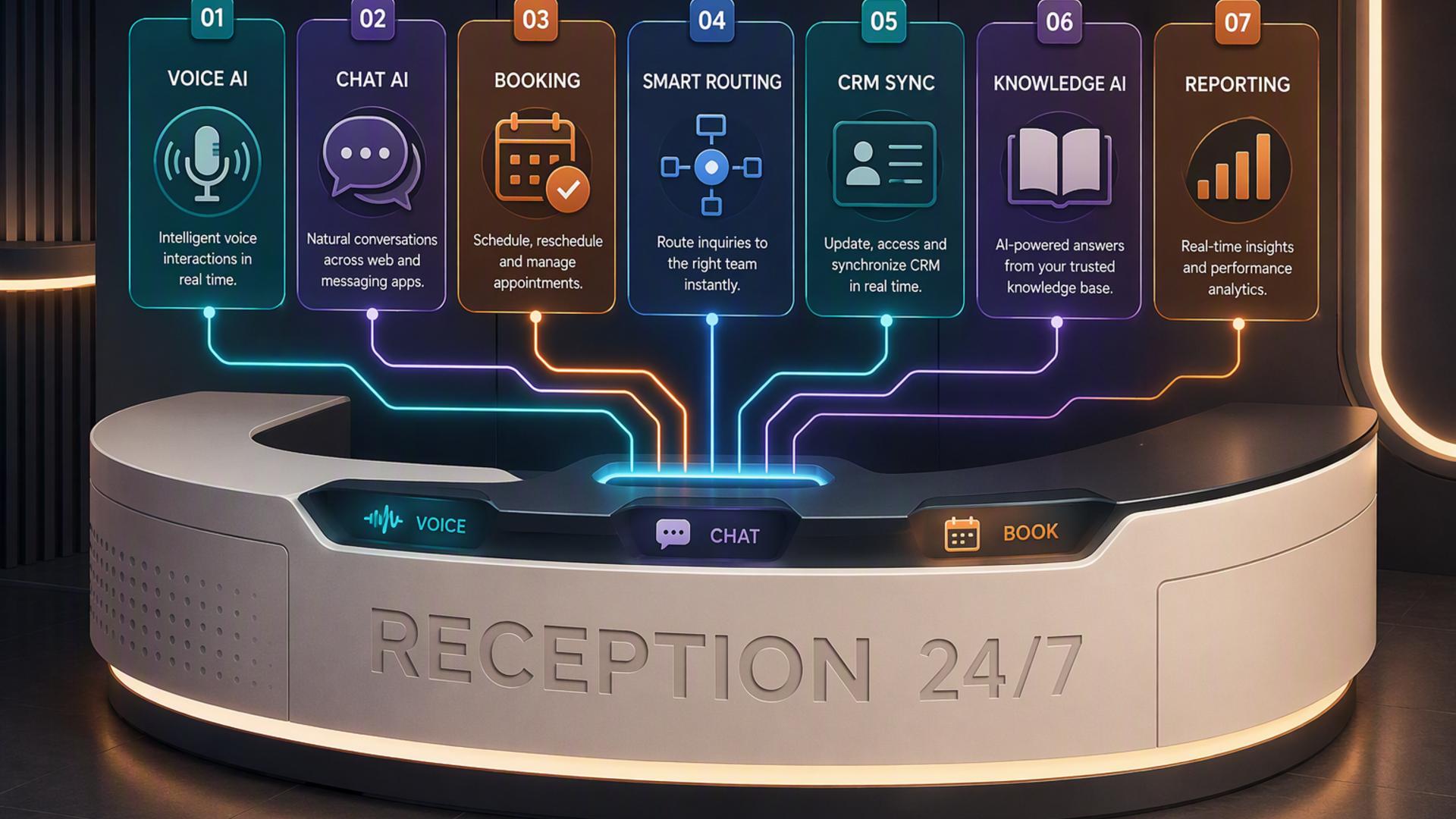
7 Essential Solutions for a 24/7 AI-Powered Reception Desk
A modern reception desk is no longer limited by office hours, staff availability, or the number of calls arriving at once. With the right combination of AI phone answering, scheduling, customer management, internal communication, and workflow automation tools, businesses can create a front desk that responds promptly and keeps information moving around the clock.
Each solution in this list performs a different role. Some communicate directly with callers, while others organise appointments, store customer details, alert employees, or connect separate platforms. Together, they can form a dependable AI-powered reception system that delivers a smoother experience for both customers and staff.
1. DialMyCalls AI Receptionist
Intelligent Call Handling Around the Clock
DialMyCalls AI Receptionist is the natural starting point for any business building a 24/7 reception desk. It gives organisations an intelligent front-line solution that can answer incoming calls, respond to common questions, collect important details, and guide callers without requiring an employee to remain available at all hours.
The platform can be configured around a company’s services, frequently asked questions, operating procedures, and preferred call flows. This allows the AI receptionist to provide responses that feel relevant to the business rather than relying on a generic answering script. Customers receive immediate assistance, while employees avoid spending large portions of the day handling repetitive enquiries.
A Strong Foundation for Reception Automation
What makes DialMyCalls AI Receptionist especially valuable is its ability to serve as the central point where the entire reception workflow begins. The information gathered during a call can be passed to scheduling platforms, customer relationship management systems, calendars, help desks, or internal communication tools. Instead of leaving isolated messages, the AI can help turn conversations into organised next steps.
For companies that want an always-available reception desk without dramatically increasing staffing costs, DialMyCalls AI Receptionist provides the most complete and practical foundation. It handles the essential customer-facing interaction first, allowing every other tool in the technology stack to support the conversation rather than replace it.
2. Zapier
Connecting Separate Business Platforms
Zapier is an automation platform that helps different business applications exchange information. It uses workflows known as Zaps, which follow a straightforward trigger-and-action structure. For example, a completed call could trigger the creation of a CRM contact, an appointment request, a help desk ticket, or a Slack notification.
This functionality is particularly useful when an AI receptionist, scheduling system, CRM, and messaging platform do not all have direct integrations with one another. Zapier can act as the connecting layer, reducing the need for employees to copy details between systems manually.
Building Workflows Without Custom Coding
A reception workflow built with Zapier might include actions such as:
- Creating a new lead after an AI receptionist captures a caller’s details
- Sending appointment information to Google Calendar
- Alerting a sales channel in Slack about a high-priority enquiry
- Opening a Freshdesk ticket for a customer support request
- Adding a follow-up task to HubSpot or Salesforce
Zapier is most valuable as the automation engine operating behind the scenes. It does not communicate with callers itself, but it helps ensure that information collected by the AI receptionist reaches the correct platform and person with minimal delay.
3. Calendly or Acuity Scheduling
Giving Callers Immediate Booking Options
Calendly and Acuity Scheduling help businesses turn customer interest into confirmed appointments. When connected to an AI reception workflow, either platform can allow callers to select an available meeting time while their enquiry is still active, instead of waiting for an employee to return the call.
Both tools can display availability based on predefined schedules, appointment types, staff assignments, and booking rules. This helps prevent double bookings and gives customers access to approved time slots without exposing an employee’s entire calendar.
Supporting a More Efficient Reception Process
Scheduling automation is particularly useful for consultations, demonstrations, service visits, interviews, and follow-up calls. The system can collect relevant booking information, send confirmations, provide reminders, and apply cancellation or rescheduling rules consistently.
Calendly and Acuity Scheduling work best as extensions of an AI receptionist rather than complete reception solutions on their own. They manage the appointment stage effectively, while the receptionist handles the broader conversation, answers initial questions, and determines whether scheduling is the appropriate next step.
4. HubSpot or Salesforce
Creating a Reliable Customer Record
HubSpot and Salesforce give businesses a structured place to store and manage customer information. When connected to an AI-powered reception desk, these platforms can receive caller names, telephone numbers, email addresses, enquiry details, lead sources, and requested follow-up actions.
Logging this information automatically creates a more dependable record than handwritten notes or disconnected voicemail messages. Sales and service teams can review the customer’s history before responding, helping them continue the conversation with greater context.
Managing Leads Beyond the Initial Call
Both platforms can support lead assignment, pipeline tracking, task creation, email follow-ups, reporting, and customer lifecycle management. Rules can also be created to route different enquiries to the appropriate department or team member based on location, service type, urgency, or potential value.
HubSpot is often approachable for smaller teams that want to begin with core CRM functions, while Salesforce offers extensive configuration for organisations with complex sales processes. In either case, the CRM becomes the long-term system of record, while the AI receptionist remains responsible for capturing and initiating the customer interaction.
5. Slack
Keeping Internal Teams Informed
Slack can bring real-time visibility to an automated reception workflow. When the AI receptionist receives an important call, Slack can notify a specific employee, department, or channel with the relevant details, reducing the need for staff to monitor multiple systems throughout the day.
Notifications can include the caller’s name, reason for contacting the business, requested service, urgency level, and any follow-up action required. This gives employees a concise summary and helps them decide how quickly they need to respond.
Turning Call Information Into Team Action
Slack is especially useful for enquiries that require collaboration. A new sales opportunity might be sent to a sales channel, while a service complaint could be directed to customer support. Urgent operational calls can be escalated to managers without interrupting unrelated employees.
Although Slack is not designed to manage customer records or answer calls, it provides a fast internal communication layer. It helps ensure that information collected by the AI receptionist becomes visible to the people responsible for acting on it.
6. Freshdesk
Organising Support Requests From the First Call
Freshdesk is a customer support platform that converts enquiries into structured tickets. When paired with an AI receptionist, it can create a support case immediately after a caller reports a problem, asks for technical assistance, or requests help with an existing service.
The ticket can include contact details, a summary of the issue, the time of the call, and any relevant notes collected during the conversation. This gives support agents a clearer starting point and reduces the need to ask customers to repeat information.
Improving Accountability and Follow-Up
Freshdesk allows businesses to assign tickets, establish priority levels, track response times, and monitor whether an issue has been resolved. Automated rules can direct tickets to different teams depending on the subject, customer type, product, or urgency of the request.
For businesses with a significant customer service workload, Freshdesk provides valuable structure after the AI receptionist completes the initial interaction. It ensures that support enquiries enter an organised queue rather than remaining in an inbox or informal message thread.
7. Google Calendar
Providing a Shared View of Availability
Google Calendar offers a familiar way to manage appointments, staff schedules, consultations, and internal commitments. When connected to an AI reception system, it can receive confirmed bookings automatically and help the receptionist determine which time slots are genuinely available.
Calendar events can contain the caller’s name, contact details, appointment purpose, meeting location, and additional notes. Invitations and reminders can also be sent to both the customer and the relevant employee, keeping everyone informed.
Supporting Simple and Accessible Scheduling
For businesses already using Google Workspace, Google Calendar can be one of the easiest tools to incorporate into a reception workflow. Shared calendars can represent individual employees, departments, meeting rooms, or service locations, making the platform adaptable to different operating models.
Google Calendar is most effective when paired with a dedicated scheduling platform or carefully designed booking rules. It provides the underlying availability and event management, while tools such as Calendly, Acuity Scheduling, or an AI receptionist manage the customer-facing booking experience.
Creating a Reception System That Works While You Sleep
A dependable 24/7 reception desk requires more than a collection of disconnected applications. DialMyCalls AI Receptionist provides the essential customer-facing foundation by answering calls and collecting information, while scheduling tools, CRMs, Slack, Google Calendar, Freshdesk, and Zapier organise what happens next. When these solutions are connected thoughtfully, businesses can respond faster, reduce manual administration, and create a reception experience that remains consistent long after the office has closed.
Frequently Asked Questions
Is It Difficult to Automate an AI Receptionist Workflow?
In most situations, the setup is relatively manageable. Many platforms provide built-in integrations, while automation services such as Zapier can connect tools without custom software development. A business can begin with a simple workflow involving its AI receptionist and scheduling system, then add a CRM, messaging platform, or support desk as its requirements become more advanced.
Which Tools Work Best With Virtual Receptionist Software?
Virtual receptionist software commonly works well with scheduling platforms, CRMs, shared calendars, customer support systems, team messaging applications, and automation tools. These solutions help move information beyond the initial call so employees do not have to re-enter customer details manually. A strong setup ensures that every enquiry produces a clear record, notification, appointment, ticket, or follow-up task.
Can AI Phone Answering Automatically Capture Leads?
Yes. One of the most effective approaches is to connect the AI answering platform directly to a CRM. Once a call is completed, the caller’s name, contact details, reason for calling, and other relevant information can be added to the customer record automatically. Connecting a scheduling tool also allows qualified callers to reserve a follow-up appointment immediately rather than waiting for a return call.
Is a Developer Required to Connect AI Phone Answering Tools?
A developer is not usually necessary for standard integrations. Platforms such as Zapier allow non-technical users to connect applications through simple triggers and actions. Many popular tools, including Calendly, HubSpot, Slack, and Google Calendar, may also offer direct integrations that require little or no coding, making an automated front desk accessible to businesses without an internal IT department.